


The right outdoor TV setup depends on how much sunlight your screen gets during the day.
The short answer:
- Open, full sun exposure → Full sun outdoor TV (1,500 – 5,000+ nits)
- Partially shaded areas → Partial sun outdoor TV (700 – 1,000 nits)
- Covered areas → Lower brightness works
The best type of TV for outdoors depends on sunlight exposure: full sun areas need higher brightness, while shaded spaces require less.
If you're deciding on the best type of tv for outdoors, start with your environment first—everything else follows from that.
Quick Summary
What Makes an Outdoor Living Space Work Long-Term
Effortless outdoor living starts with entertainment setups that stay outdoors year-round, require minimal upkeep, and integrate visually into the environment. Achieving this requires weatherproof outdoor TVs, all-weather furniture, and system-level planning.
This article explains how these elements work together to create high-end, low maintenance, and durable outdoor living spaces. It also highlights what to prioritize when choosing outdoor TVs and furniture for long-term outdoor use. Drawing from the collaboration between Sylvox and Outer, it introduces the Ultimate Outdoor Oasis, showcased at CES 2026, where Sylvox presents the world's first frameless outdoor TV.
Full Sun vs Partial Sun Outdoor TVs: What's the Difference?
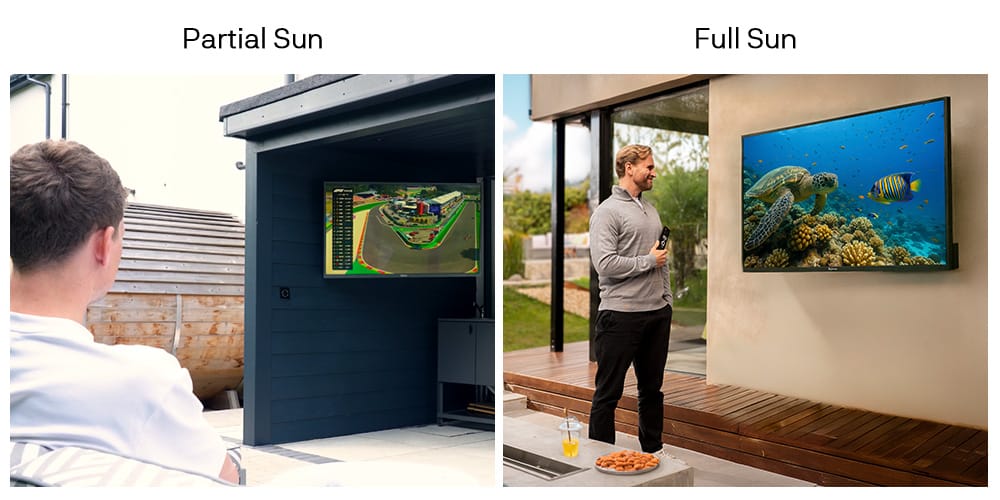
The difference between full sun and partial sun outdoor TV comes down to full sun exposure—full sun TVs are built for unshaded outdoor areas, while partial sun TVs are designed for shaded or covered outdoor areas. Both are sunlight-readable TVs, so they stay visible in outdoor light.
What is a full sun outdoor TV?
A full sun outdoor TV is designed for areas with full sun exposure and no overhead cover for several hours a day.
Common scenarios:
- Poolside walls
- Uncovered patios
- Rooftop decks
- Outdoor lounge areas without pergolas
- Exterior walls facing west or south (strong afternoon sun)
These are the kinds of setups where a standard screen quickly becomes hard to see, especially in peak daylight.
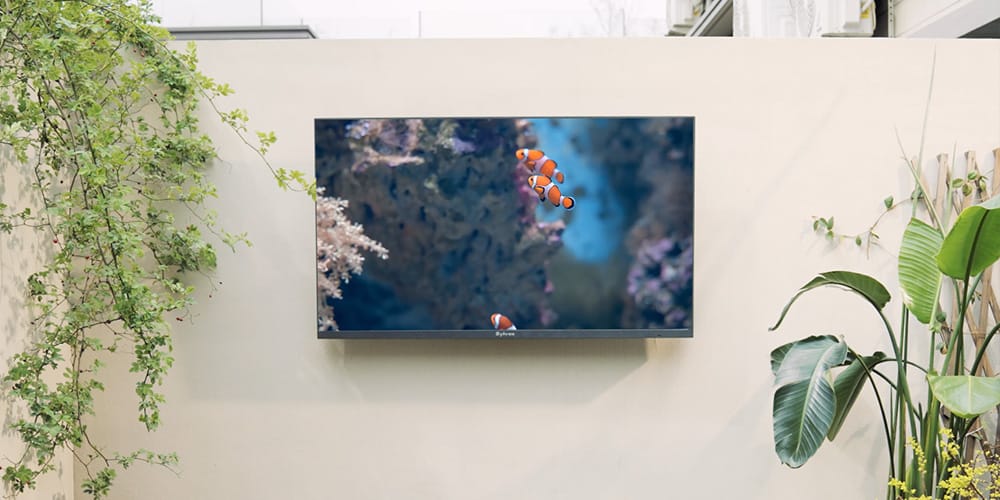
What is a partial sun outdoor TV?
A partial sun outdoor TV is intended for areas with some form of shade or structure that blocks direct sunlight.
Typical placements:
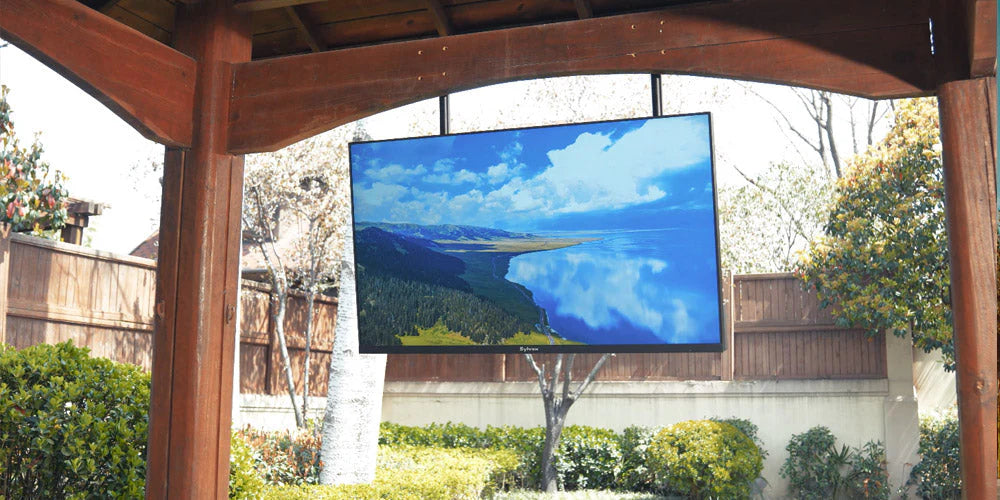
- Covered patios
- Pergolas or gazebos
- Outdoor kitchens with a roof
- Decks under an overhang
In these environments, brightness still matters—but not to the same extreme level as full sun exposure.
When do you need a full sun outdoor TV?
You need a full sun outdoor TV when your screen is exposed to sunlight for extended periods, especially midday to afternoon.
If your TV is placed in full sunlight for several hours a day, a full sun outdoor TV is required to maintain visibility.
If you're unsure what is the best type of TV for outdoors, observe your backyard space across the day—not just at one moment.
Full sun vs partial sun outdoor TV: quick comparison
| Type | Best for | Brightness |
|---|---|---|
| Full sun | Full sun exposure, no overhead cover | 1,500 – 5,000 nits |
| Partial sun | Covered or semi-shaded areas | 700 – 1,000 nits |
How Many Nits Do You Need for an Outdoor TV?
Brightness determines whether your screen stays watchable outdoors—especially during the brightest hours of the day.
What to look for in outdoor TV brightness
When evaluating outdoor TV brightness, focus on how visible the screen remains in your actual lighting conditions.
Outdoor TVs typically require 700 to over 2,000 nits, depending on sun exposure. Shaded areas need around 700–1,000 nits, while high-sunlight environments requires 1,500–2,000+ nits for clear visibility.
This is why questions like how many nits for outdoor TV often come down to where the TV is installed—not just the spec itself.
Outdoor TV brightness levels by environment
| Environment | Recommended Brightness |
|---|---|
| Full covered areas | 500–700 nits |
| Partially shaded outdoor areas | 700–1,000 nits |
| Unshaded areas with full sun exposure | 1,500–3,000+ nits |
If you're comparing outdoor TV nits across different models, this range is what actually matters in real-world use.
Is higher brightness always better when choosing outdoor TV?
Not necessarily.
A 2,000 nits outdoor TV performs well in full sun exposure, but that level isn't necessary for shaded patios or covered decks.
Choosing based on environment avoids overpaying and helps you find the right balance between performance and cost. This is especially relevant when comparing options like bright TV for outdoors or high brightness outdoor TV, where the difference often comes down to use case rather than specs alone.
Can Direct Sunlight Damage a TV?
Yes—direct sunlight can damage a TV over time, especially if it's not designed for outdoor use.
“Sunlight-readable” doesn't mean a TV can stay under constant sun exposure all day. It means the screen remains visible in sunlight, though adding partial shade during peak hours can help maintain long-term performance.
What happens with prolonged sunlight exposure?
Extended exposure to sunlight introduces both UV radiation and heat:
- UV exposure can gradually break down screen materials and cause yellowing over time
- Heat buildup increases internal stress, which can affect performance
Over time, this may lead to:
- Reduced brightness
- Color shift
- Dark spots on the screen
This kind of sunlight damage to TV screens can affect different display types, including LCD/LED TV screens and OLED TV screens, though the way it appears may differ.
Industry testing has shown similar results. For example, Atlas' UV durability study on LCD and OLED displays shows that prolonged sunlight exposure can accelerate material degradation due to UV and heat.
Indoor vs Outdoor TV Performance in Sunlight
| Feature | Indoor TV / Regular TV | Outdoor TV |
|---|---|---|
| Visibility in sunlight | Poor | Clear |
| Heat resistance | Low | High |
| UV resistance | Minimal | Improved for outdoor conditions |
| Operating temperature range | 50–104°F (10–40°C) | -22–122°F (-30–50°C) |
| Outdoor suitability | Not recommended | Built for outdoor environments |
Outdoor TVs—especially a full sun outdoor TV—are designed for bright, sun-exposed environments with:
- High-brightness panels for clear viewing in sunlight
- Enhanced heat management to stay stable in peak daytime heat
- Screen materials optimized to maintain contrast and color under intense light
For example, Sylvox outdoor TVs are built to deliver clear, high-contrast visuals in high-sunlight conditions, not just occasional outdoor viewing.
How to Choose the Best Type of TV for Outdoors
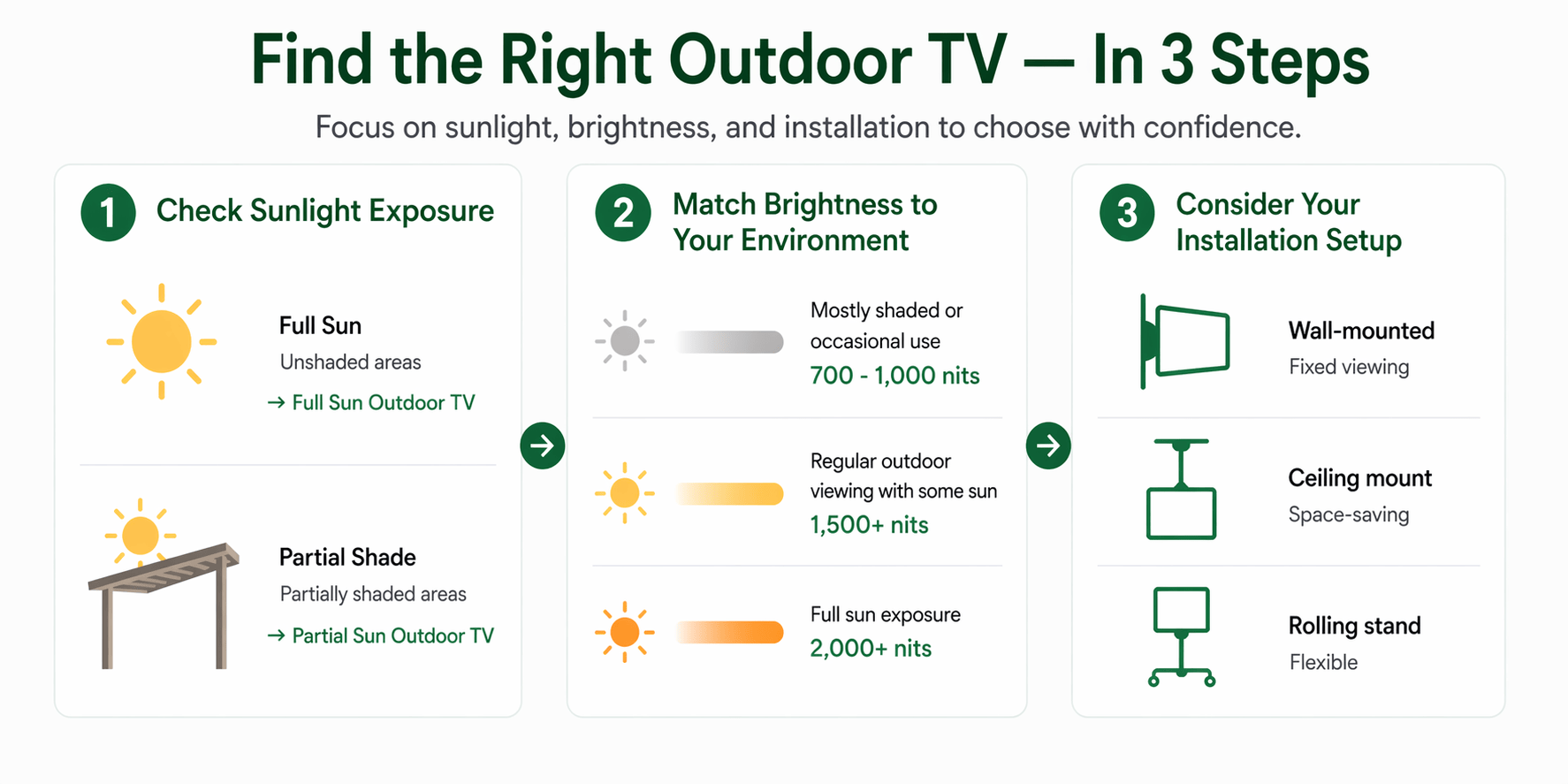
To choose the best TV type for outdoors, focus on three things: sunlight exposure, brightness, and installation—this simple approach helps narrow your decision quickly. Here's a quick guide:
1. Check sunlight exposure
- Unshaded areas → Full sun outdoor TV
- Partial shade → Partial sun outdoor TV
2. Match brightness to your environment
Choose your brightness based on how you actually use the space:
- Mostly shaded or occasional daytime use → 700 - 1,000 nits
- Regular outdoor viewing with some sun → 1,500+ nits
- Full sun exposure → 2,000+ nits
3. Consider your installation setup
- Wall-mounted → fixed viewing
- Ceiling mount → space-saving
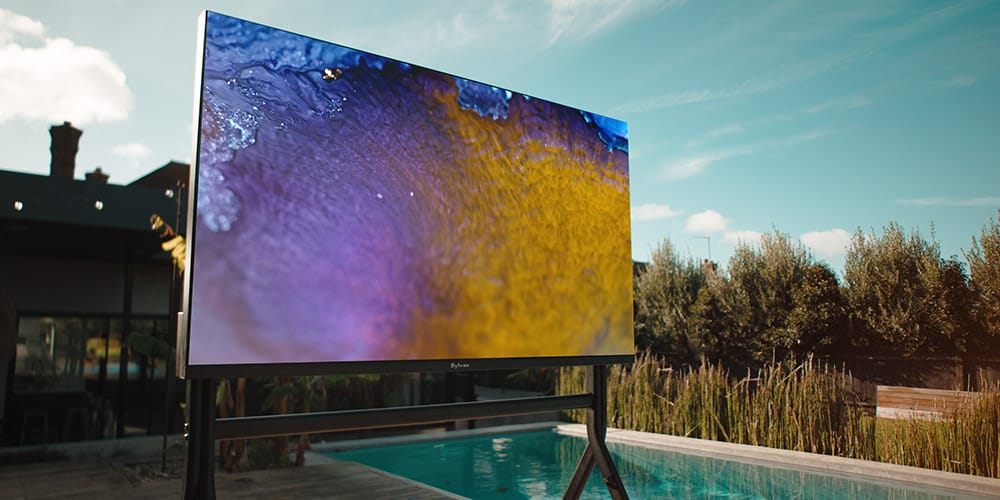
- Rolling stand → flexible
Outdoor TV FAQs: Brightness & Sunlight
How to watch TV in the sun?
To watch TV in the sun, you need a high-brightness outdoor TV with 700 - 1,000 nits for partial sunlight and 2000+ nits for full sun exposure, along with an anti-glare display. Adding shade—such as a pergola, awning, or partial cover—can also help improve visibility and viewing comfort.
What is the best outdoor TV for direct sunlight?
The best outdoor TV for bright, unshaded spaces is a full sun model with 2,000+ nits, designed to maintain clear, high-contrast visuals in high-sunlight environments. Brands like Sylvox outdoor TV are built for this type of setup, especially when installed with some overhead cover during peak hours for optimal performance.
Do I need a cover for an outdoor TV?
Outdoor TVs are weather-resistant, but a cover helps extend lifespan in harsher conditions.
What type of TV works best in a bright room?
The best TV for bright room is a high-brightness TV with at least 700 nits or higher, to maintain clear and readable visuals in strong ambient light.
How many nits is considered sunlight readable?
A screen is considered sunlight readable at 1,500–2,000+ nits, while 700–1,000 nits is sufficient for partial sunlight or shaded outdoor areas.
What TV has 5,000 nits?
TVs with 5,000 nits are considered ultra bright outdoor TVs, such as the Sylvox Cinema Pro 110″, built to deliver an outdoor cinema-level viewing experience in high-sunlight environments.
Still narrowing down your options?
See if you can leave a TV outside in winter
Or start with proven options like Sylvox outdoor TVs, designed for everything from shaded patios to full sun installations—so you can choose once and avoid upgrading later.


